Roller blinds are a popular choice for modern homes because they offer a clean appearance, simple operation, and practical control over natural light and privacy. However, choosing the right blind involves more than selecting a colour that matches the interior.
The fabric has a major influence on how a roller blind performs.
Homeowners comparing Roller Blinds Auckland options should think about how each room is used, how much sunlight enters the space, how much privacy is required, and whether the room is exposed to moisture or strong glare.
A fabric that works well in a bedroom may not necessarily be the best option for a kitchen, living room, or home office.
This guide explains how to choose roller blind fabrics for different rooms so you can balance comfort, appearance, privacy, and everyday practicality.
Why Roller Blind Fabric Choice Matters
The fabric determines how much light passes through the blind and how much visibility it provides when closed.
Some fabrics soften sunlight while keeping a room bright. Others offer stronger coverage for bedrooms or spaces where privacy is a priority. Certain fabrics may also be easier to maintain in areas where cooking, moisture, or frequent use is involved.
When choosing Blinds Auckland homeowners should therefore consider the function of each room instead of using the same material throughout the entire home.
Three common fabric categories are often considered:
- Light-filtering fabrics
- Blockout fabrics
- Sunscreen or screen fabrics
Each option serves a different purpose.
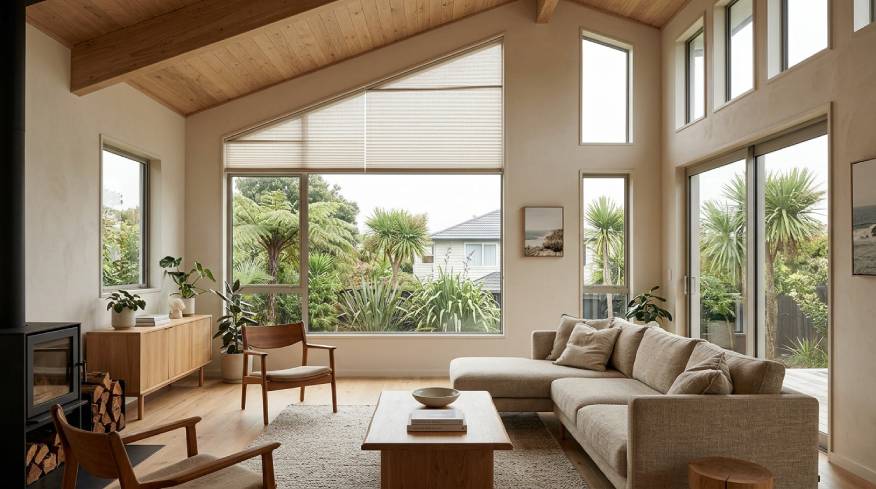
Light-Filtering Fabrics for Living Rooms
Living rooms usually benefit from natural daylight, but direct sunlight can sometimes become uncomfortable.
Light-filtering roller blind fabrics soften incoming light without completely darkening the room. They can help reduce brightness while maintaining an open and welcoming atmosphere.
This makes them suitable for family rooms and living spaces where homeowners want a balance between natural light and privacy.
Light-filtering fabrics are also available in a wide range of neutral tones, making it easier to coordinate them with flooring, furniture, wall colours, and other furnishings.
For homeowners who prefer a softer and more layered interior, curtains and sheers can also be combined with roller blinds.
The roller blind provides practical light control, while curtains can add texture and warmth to the room.
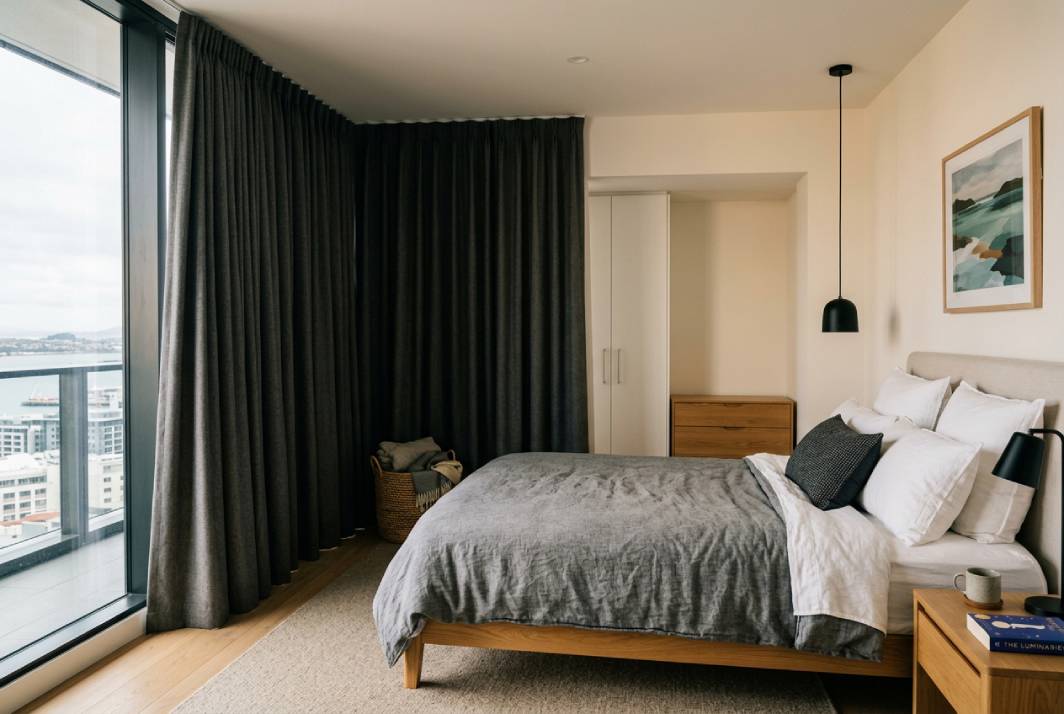
Blockout Fabrics for Bedrooms
Bedrooms usually require more privacy and stronger control over external light.
Blockout roller blind fabrics are designed to significantly reduce light passing through the material. This makes them well suited to bedrooms exposed to early morning sunlight, streetlights, or nearby properties.
They can also help create a more comfortable sleeping environment for shift workers, children, or anyone who prefers a darker bedroom.
When selecting blockout Roller Blinds Auckland, homeowners should also pay attention to the fitting.
Even if the fabric blocks light effectively, small gaps around the sides of the blind may still allow brightness to enter.
If maximum room darkening is important, homeowners may also want to compare roller blinds with blackout curtains, particularly for bedrooms where fuller window coverage is preferred.
Choosing Bedroom Colours
Blockout fabric does not necessarily need to be black or dark grey.
Many modern blockout fabrics are available in cream, beige, taupe, soft grey, and other neutral shades.
A lighter shade can maintain a calm and spacious look while still providing the required level of coverage.
The colour should complement the room rather than being selected only according to its perceived darkness.
Sunscreen Fabrics for Home Offices
Home offices often require a different balance.
Too much direct sunlight can create glare on computer screens, but completely blocking natural light may make the workspace feel dark or enclosed.
Sunscreen roller blind fabrics can help reduce glare and brightness while allowing some natural light into the room.
This makes them useful for windows facing strong daytime sunlight.
They can also help maintain some connection with the outdoors, depending on the openness of the fabric and lighting conditions.
For a home office, consider:
- The direction of the window
- The position of computer screens
- How much daytime privacy is required
- Whether the room becomes too bright in the afternoon
The most suitable fabric should make the workspace comfortable without unnecessarily reducing natural daylight.
Roller Blind Fabrics for Kitchens
Kitchens require practical materials because the window covering may be exposed to cooking activity, humidity, dust, or frequent cleaning.
A simple roller blind can work well because it takes up relatively little space and can be raised completely when not needed.
When selecting fabric for a kitchen, look for a material that is easy to maintain and suitable for the conditions around the window.
The exact choice will depend on where the window is positioned.
A blind installed away from cooking and washing areas may have more fabric options than one placed close to the sink or food preparation area.
Neutral-coloured blinds often work well in kitchens because they complement cabinets, worktops, tiles, and appliances without dominating the space.
Choosing Roller Blinds for Bathrooms
Privacy is usually the first consideration in a bathroom.
The fabric should provide suitable coverage while also being appropriate for a room that may experience higher levels of moisture.
A blockout or privacy-focused roller blind can be suitable where the window is directly visible from neighbouring properties or outdoor areas.
However, material suitability and window positioning should be considered carefully.
Blinds installed close to showers, baths, or areas with frequent moisture exposure may require more careful fabric selection than those in a well-ventilated, dry part of the bathroom.
The blind should also be easy to operate so that the window can remain accessible for ventilation when required.
Fabric Choices for Dining Areas
Dining rooms often sit between functional and decorative spaces.
Homeowners may want natural daylight during breakfast or lunch while preferring stronger privacy in the evening.
A light-filtering blind may be suitable where privacy is not a major issue, while a dual blind system can provide more flexibility throughout the day.
Warmnest Curtains offers roller blinds in a dual-layer configuration, allowing day and night functions within one system.
This type of setup can be useful for dining spaces where lighting requirements change throughout the day.
Roller Blinds for Children's Rooms
Children’s bedrooms require a combination of light control, simple maintenance, and a calm interior appearance.
Blockout fabrics may help reduce external light during sleeping hours, while neutral colours can remain suitable as the room’s style changes over time.
Rather than choosing very bold patterns that may quickly become outdated, homeowners can select a simple roller blind and introduce colour through bedding, artwork, or decorative accessories.
The blind should also be professionally fitted and operated safely according to the system being used.
What About Large Windows and Sliding Doors?
Large windows require more consideration because the blind itself may become wider and heavier.
The fabric needs to remain stable and visually neat across a larger area.
Depending on the size of the opening, a single large blind may not always be the most practical solution. Dividing the window into multiple blinds may provide easier operation and better control over different sections.
For very wide openings or sliding doors, homeowners may also want to compare roller blinds with other Blinds Auckland options such as vertical blinds.
The best choice will depend on window dimensions, how often the door is used, and the desired appearance.
Should Every Room Use the Same Fabric?
Not necessarily.
Using the same colour throughout the home can create visual consistency, but the functional requirements may still vary from room to room.
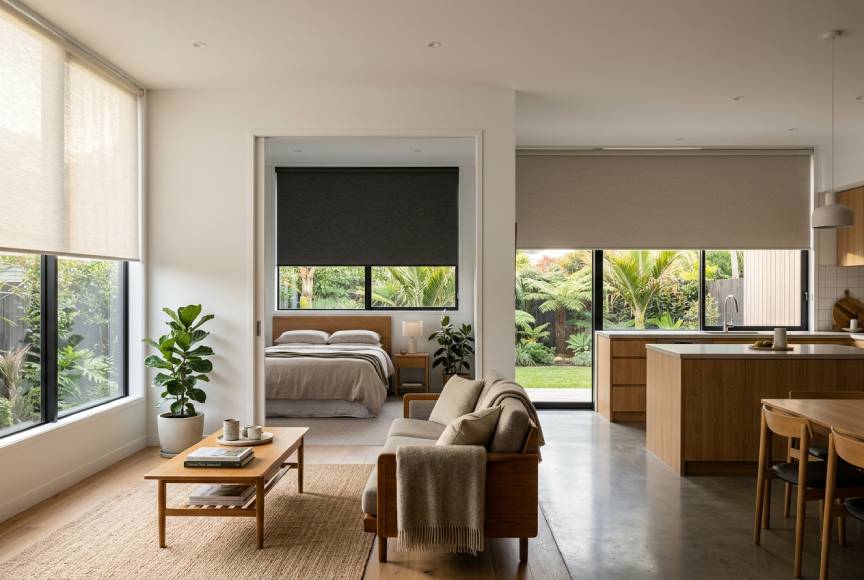
For example, you might choose:
- Light-filtering fabric in the living room
- Blockout fabric in the bedrooms
- Sunscreen fabric in the home office
- A practical, easy-maintenance option in the kitchen
These fabrics can still be selected from a similar colour family so the interior remains coordinated.
This approach allows homeowners to achieve a consistent look without sacrificing functionality.
Consider Colour, Texture, and Interior Style
Function should come first, but roller blinds are also part of the room’s design.
Neutral colours such as white, cream, beige, grey, and taupe are popular because they work easily with many interior styles.
Darker fabrics can create stronger contrast and may suit contemporary spaces with darker cabinetry, furniture, or window frames.
Texture should also be considered.
Some roller blind fabrics have a smooth minimalist finish, while others have a subtle woven appearance that adds more visual interest.
The best choice should complement the room without making the blind feel disconnected from the surrounding furnishings.
Custom Fit Makes a Difference
Selecting the correct fabric is only one part of choosing roller blinds.
Accurate measurement and installation affect how the finished blind looks and operates.
A blind that is too narrow may leave unnecessary gaps, while incorrect positioning can affect both privacy and light control.
Professional measurement can take into account:
- Window width and height
- Recess depth
- Window handles
- Frame dimensions
- Mounting position
- Nearby walls or fittings
Warmnest Curtains provides professional measurement and installation as part of its window furnishing service, helping homeowners choose blinds according to their actual window dimensions and room requirements.
Choosing the Right Roller Blinds for Your Auckland Home
The best roller blind fabric depends on what you expect the room to do.
Bedrooms usually need stronger light control, while living rooms may benefit from softer daylight. Home offices often require glare management, while kitchens and bathrooms need greater attention to practicality and maintenance.
Before selecting Roller Blinds Auckland, consider how sunlight moves through the room, how much privacy you need, the window size, the surrounding interior, and how often the blind will be used.
Choosing fabric room by room allows the window furnishings to work more effectively while still maintaining a consistent interior style.
Warmnest Curtains provides roller blinds and other indoor window solutions for Auckland homes, with guidance on material selection, measurement, supply, and installation.
If you are unsure which roller blind fabric suits your living room, bedroom, kitchen, or home office, book a consultation to explore suitable options for your space.